A Patient Guide to Estate Cleanouts in Greater Hickory, NC
A no-pressure guide for Greater Hickory-area families clearing a home after a loss or a move, covering sizing, sorting, handling bulky items, and permits.
ReadRoofing Guide
A practical checklist for sizing, placing and timing a dumpster around a Greater Hickory re-roof, including real the Hickory area weather and permit considerations.

A re-roof in the Hickory area moves fast once a crew is on the ladder. Unlike a slow room-by-room cleanout, a roofing crew can strip an entire deck in a single day, and everything that comes off — old shingles, underlayment, flashing, and sometimes rotted decking underneath — needs somewhere to go immediately. Most homes across the Hickory area are roofed in asphalt composition shingle rather than tile, which keeps sizing more predictable here than in some other parts of the country, but the volume still catches homeowners off guard. This checklist covers sizing, driveway protection, timing around the Hickory area weather, and permits.
Asphalt shingles aren't especially heavy per square (100 square feet of roof) individually, but a full tear-off adds up quickly — old shingles, underlayment, nails, and flashing all come off at once, and many Greater Hickory-area homes have more than one layer of shingles from a prior re-roof stacked on the deck. A house with two layers of shingles being stripped down to bare decking generates meaningfully more debris than a single-layer tear-off, so it's worth telling whoever you're renting from how many layers are coming off, not just the square footage.
For most single-story homes with a single layer of asphalt shingle, a 20 yard container is a common starting point. A larger home, a multi-layer tear-off, or a job that also includes replacing decking, gutters or fascia should generally plan for a 30 yard, or discuss a swap partway through with your roofing contractor. If the job is smaller — a garage, a shed roof, or a partial section — a 10 or 15 yard is often enough.
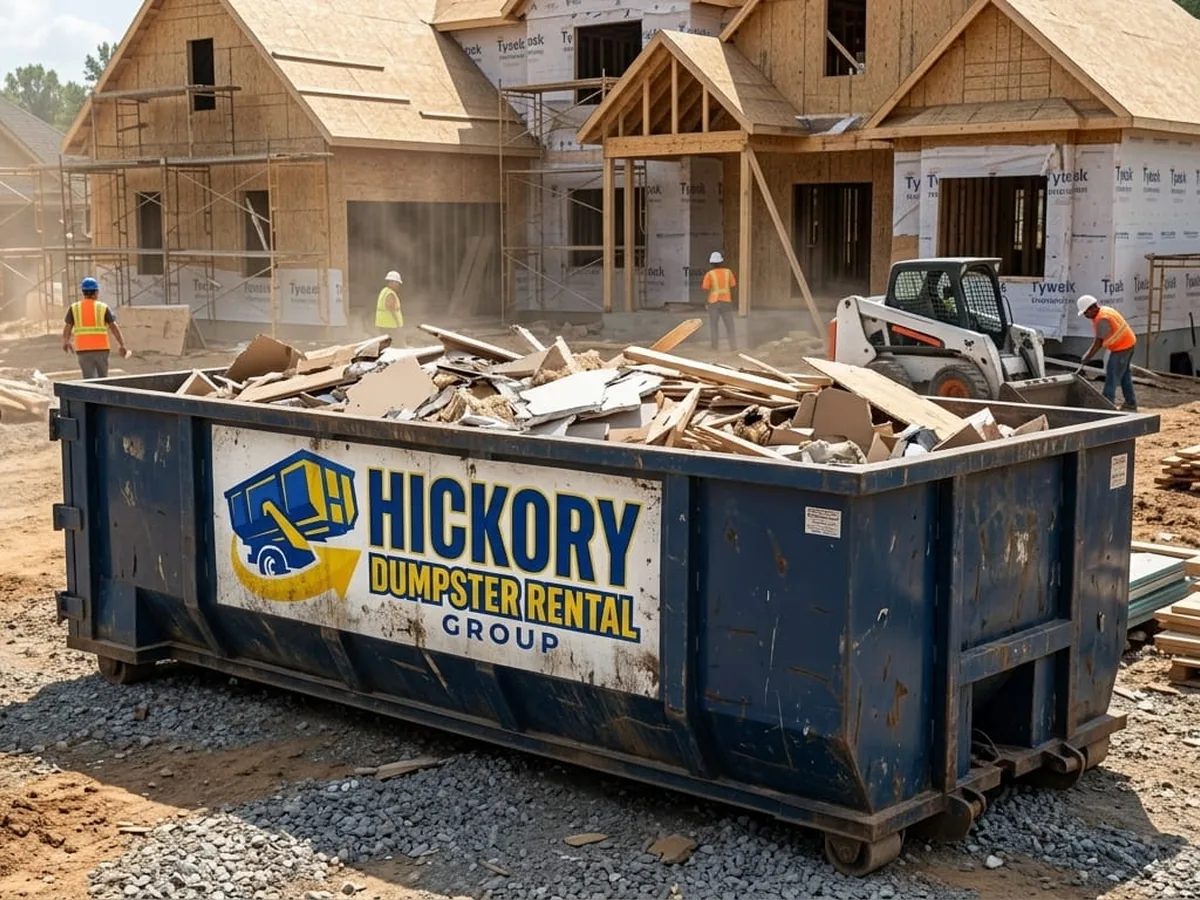
Roofing debris is denser than it looks stacked on a lawn. A container that still has visible room can already be near its weight limit once old shingles and any rotted decking are loaded in, which is why roll-off rentals are priced and rated around weight allowances rather than box volume alone. If your roof has rotted plywood or skip sheathing that needs replacing along with the shingles, mention that up front — it adds real weight on top of the shingle tear-off itself. Old felt or synthetic underlayment adds comparatively little weight on its own, but on a home with more than one layer of prior shingles it still contributes to the total, and it's one more reason to be upfront about exactly what's coming off the deck rather than just the square footage of the roof.
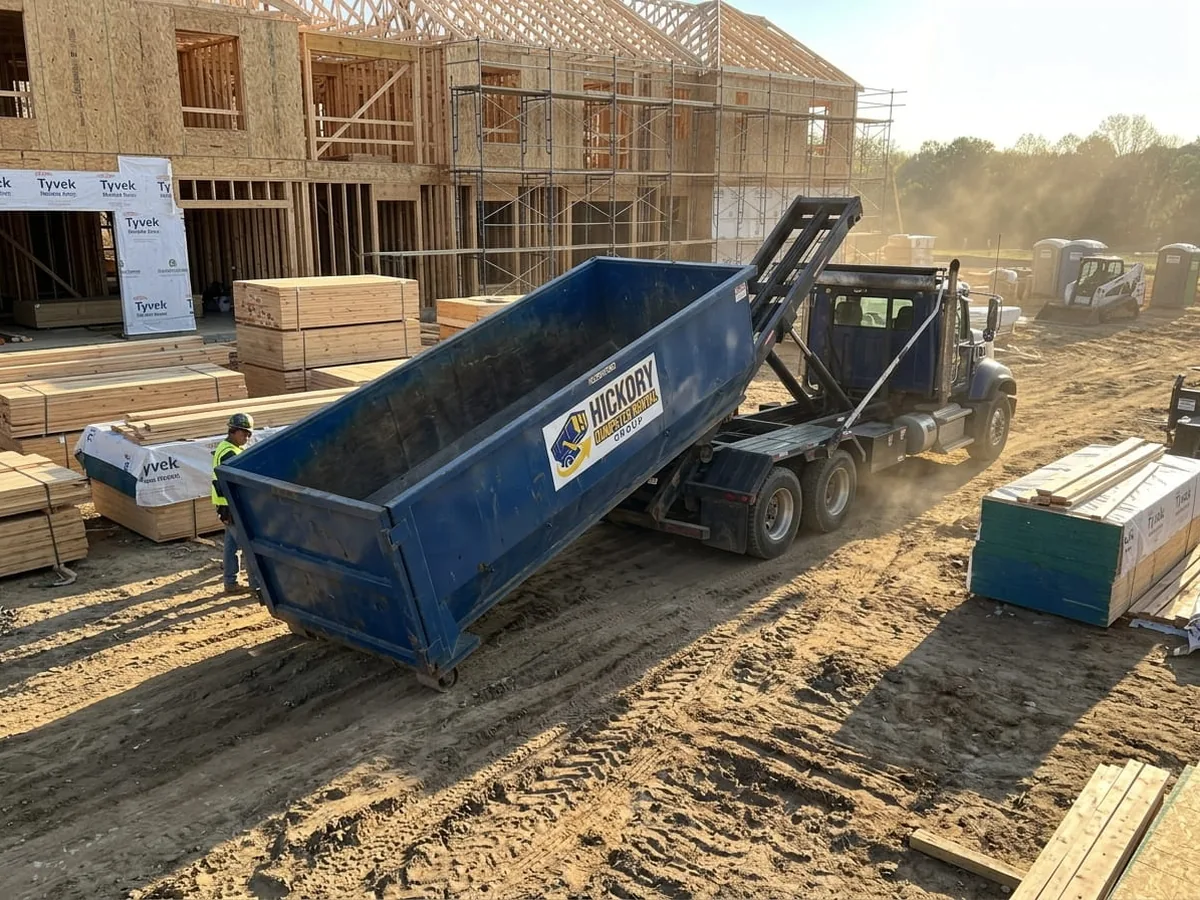
Most homeowners aren't the ones physically loading a roofing dumpster — the roofing crew is, often by pitching debris directly off the roof rather than carrying it down a ladder. That means the contractor's crew needs to be comfortable with where the container sits and how close it is to the drop zone before the job starts. It's worth having your roofing contractor walk the placement spot with you, or at least confirm it by phone, rather than picking a spot on your own and hoping it works for how the crew plans to stage the tear-off.
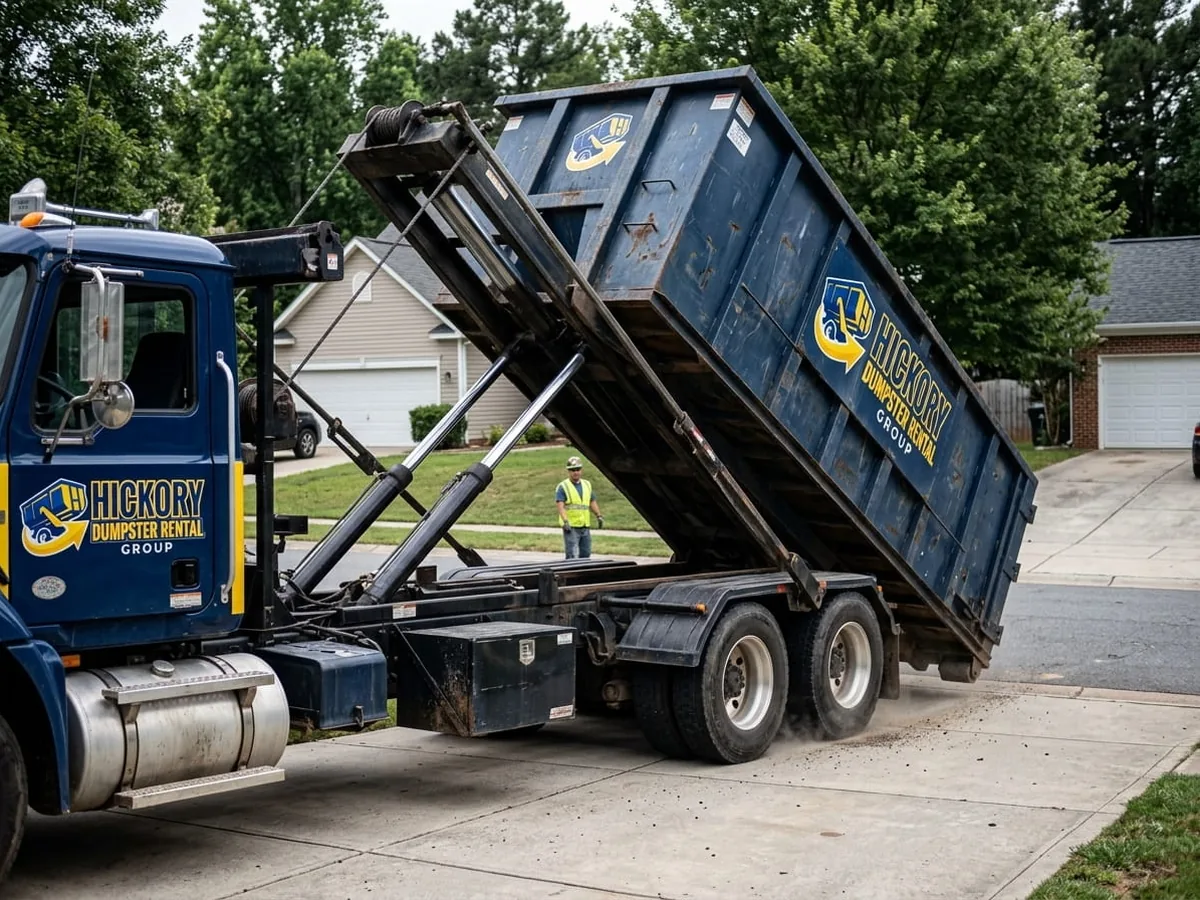
A loaded roofing container is heavy, and protecting the driveway surface matters more here than on a lighter household cleanout. Ask for boards or plywood under the delivery rails before the container is set down, particularly after heavy rain, when saturated red-clay ground can leave driveways and pavement softer than they look. Position the container close enough to the work area to actually catch debris coming off the roof, without sitting directly under the section being torn off first.
Most re-roofing in the Hickory area happens year-round thanks to the humid-subtropical climate, though crews generally avoid stripping a roof when a heavy rainstorm is in the forecast, since a tear-off leaves a deck exposed. If your project is scheduled for shoulder-season weeks in early spring or late fall, coordinate delivery closely with your roofing contractor's start date so the container isn't sitting empty — or missing — when a weather-dependent crew is ready to move.
If your driveway has room for the container, you typically won't need a permit — placement on private property is between you and your roofing contractor. If the driveway is too short, too narrow, or already holds a work trailer or material staging, and the street is the only option, that city requires a right-of-way permit from that city's Public Works Department when the container sits on a public street. Homeowners in the surrounding cities we serve should check with that city's own public-works office, since Greater Hickory doesn't handle it centrally.
A little planning before the crew shows up keeps a Greater Hickory re-roof moving, protects the driveway through whatever the Hickory area weather is doing that week, and avoids scrambling to figure out sizing after the tear-off has already started.
Talk to a real person
Call (828) 624-4167 and describe the job. Flat price, stated tonnage allowance, and a delivery window on the same call.
Mon–Sat 7:00am – 7:00pm
From this guide
A 20 yard container is a common starting point for a single-story home with one layer of asphalt shingle. Multi-layer tear-offs, larger homes, or jobs that also replace decking or gutters often call for a 30 yard.
Nearly all homes across the Hickory area and the Hickory area are roofed in asphalt composition shingle rather than tile, which keeps tear-off weight and sizing fairly predictable compared to regions with more tile roofing.
Roofing debris is dense. Old shingles, nails, underlayment and any rotted decking add weight quickly, and roll-off rentals are rated by weight allowance as well as box size, so a container can hit its weight limit before it looks visually full.
Most re-roofing happens year-round in the humid-subtropical four-season climate, though crews avoid stripping a roof with an ice storm in the forecast, since a tear-off leaves the deck exposed and crews generally avoid stripping a roof with an ice storm in the forecast.
Usually not. Placement on your own driveway is private property and typically doesn't require a permit. A permit is generally only needed if the container has to sit in the street, which in Greater Hickory means a dumpster permit through that city Public Works Department.
Keep reading
A no-pressure guide for Greater Hickory-area families clearing a home after a loss or a move, covering sizing, sorting, handling bulky items, and permits.
ReadReal dimensions, capacity, and typical uses for every dumpster size we deliver across Greater Hickory and the Hickory area, from a 10-yard cleanout to a 30-yard demolition job.
ReadA practical guide to protecting your driveway during dumpster delivery in Greater Hickory, covering concrete, asphalt and gravel surfaces, soft red-clay ground, narrow streets and when a right-of-way permit applies.
Read