Hickory sits in the Catawba Valley, in the Blue Ridge foothills of western North Carolina, below the Brushy and South Mountains and on the Catawba River. It is the historic “Furniture Capital of the World” — for a century the center of American furniture manufacturing — and today still a furniture and fiber-optic cable manufacturing hub anchoring the Hickory–Lenoir–Morganton metro of more than 365,000 people. That mix of deep manufacturing heritage and steady metro growth is what keeps a dumpster company busy here: new homes going up around the edges, a deep stock of furniture-era and mill homes being made over, and the churn of a region that keeps reinventing itself. This guide walks through the places that define Greater Hickory and the kind of work that fills a container in each.
Downtown Hickory and the Furniture Heritage
Hickory’s showpiece is its revitalized downtown around Union Square, a walkable core of early-twentieth-century storefronts, plus the Hickory Furniture Mart — a destination that draws furniture buyers from around the world — Lenoir-Rhyne University, the SALT Block arts-and-science campus and the Catawba Science Center, and the Hickory Crawdads at L.P. Frans Stadium. The surrounding neighborhoods are a core of older bungalows and furniture-era homes, and they are where renovation and cleanout work concentrates: a kitchen or bath gut in a 1950s cottage, a full re-roof, or an estate cleanout when a long-held family home finally changes hands. Our yard sits just up Hildebran Shelby Road on the southwest side, which is why Hickory, Long View, Mountain View and Hildebran are our same-day group.
Lake Hickory and the Catawba River
The Catawba River and its reservoirs — Lake Hickory, Lookout Shoals Lake and Rhodhiss Lake — wrap the north and east sides of the metro. Lakefront and riverfront neighborhoods in Bethlehem, St. Stephens and Granite Falls mean a steady run of waterfront renovations, dock and boathouse rebuilds, and the storm cleanup that comes with wooded, water-adjacent property after an ice storm or a summer blow.
Newton, Conover and Central Catawba
South and east of Hickory, Newton — the Catawba County seat, built around a historic courthouse square — along with Conover, Claremont, Maiden and Catawba form the county’s manufacturing belt. Conover’s Manufacturing Solutions Center, Maiden’s cluster of big data centers drawn by cheap Catawba River power, and Claremont’s historic Bunker Hill Covered Bridge sit along the US-70, NC-16 and I-40 corridors. That is commercial, industrial and new-construction country — tenant improvements, plant cleanouts and the framing-and-drywall waste of subdivisions filling in around the towns.
The Furniture Towns — Caldwell and Burke
Up US-321 into Caldwell County, Granite Falls and Hudson are furniture towns on the way to Lenoir, with mill-village housing stock and Caldwell Community College. Out I-40 into Burke County, Hildebran, Connelly Springs and Valdese — the last founded by Waldensian immigrants, with a distinctive Italian-Protestant heritage — carry their own textile and furniture history. These older mill and factory neighborhoods drive a constant stream of renovations, re-roofs and estate cleanouts.
What Fills a Container in Greater Hickory
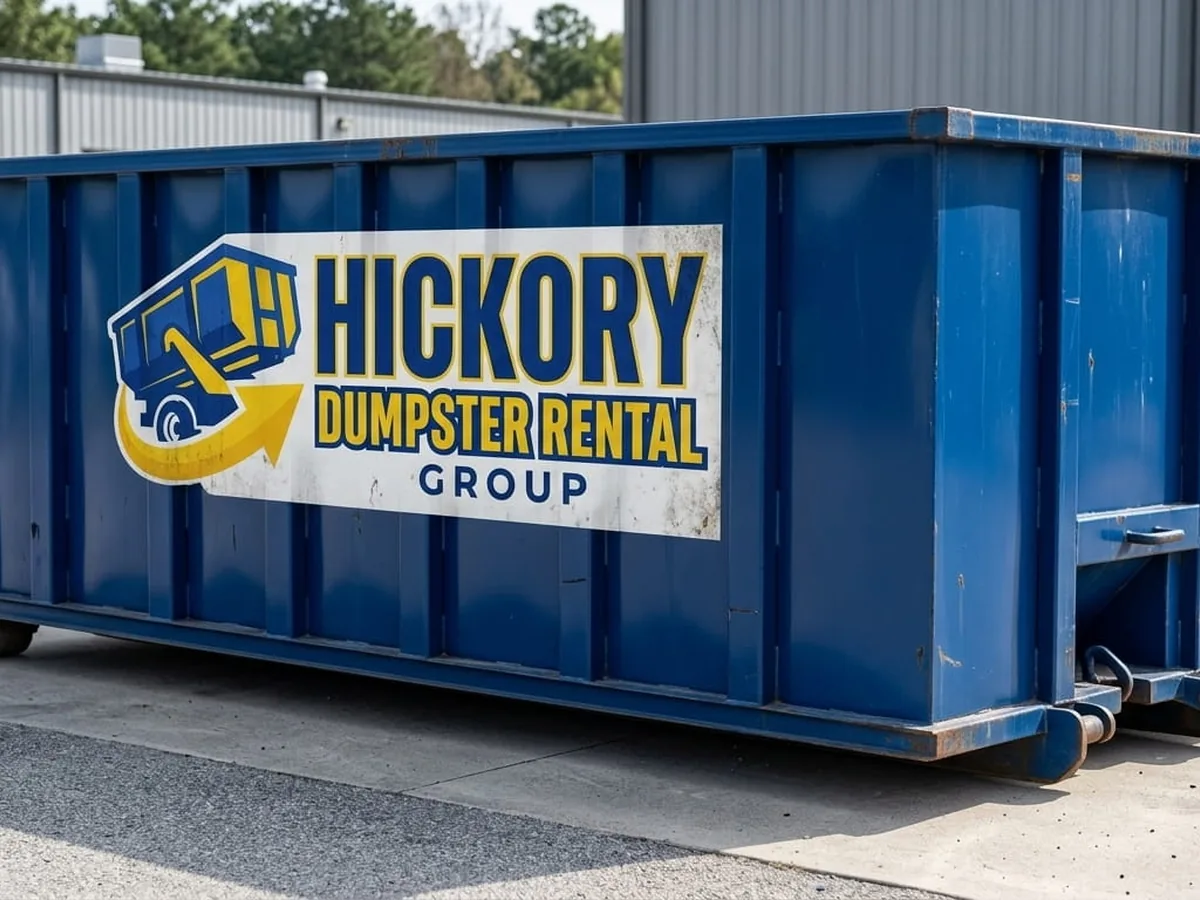
Three patterns dominate. The first is renovation and roofing on the region’s deep stock of furniture-era, mill-village and mid-century homes, which suits a roll-off on the driveway or a tear-off container. The second is new construction and the trades finishing out the subdivisions spreading across Catawba, Burke and Caldwell counties — framing offcuts, drywall and site cleanup sized to the phase. The third is estate cleanouts and move-outs, and the storm debris that an ice storm or a remnant hurricane drops with little notice — a container you fill at your own pace or we turn around fast.
Greater Hickory sits on red-clay and clay-loam soil over hard gneiss and schist bedrock, with rolling grades that run from the Catawba River bottoms up into the ridges. The clay drains slowly, so a low-lying driveway or yard can stay soft after a heavy rain, and a loaded box needs boards and a careful spot before it goes on. A container on your own driveway or lot needs no permit; if a job genuinely needs the container in a public street or right-of-way, that is a right-of-way permit through the governing city’s Public Works office (or the county — Catawba, Burke or Caldwell — for an unincorporated address), and we will tell you which applies before we deliver. Call (828) 624-4167 and describe the project — we will size a container and quote a flat rate with disposal included.