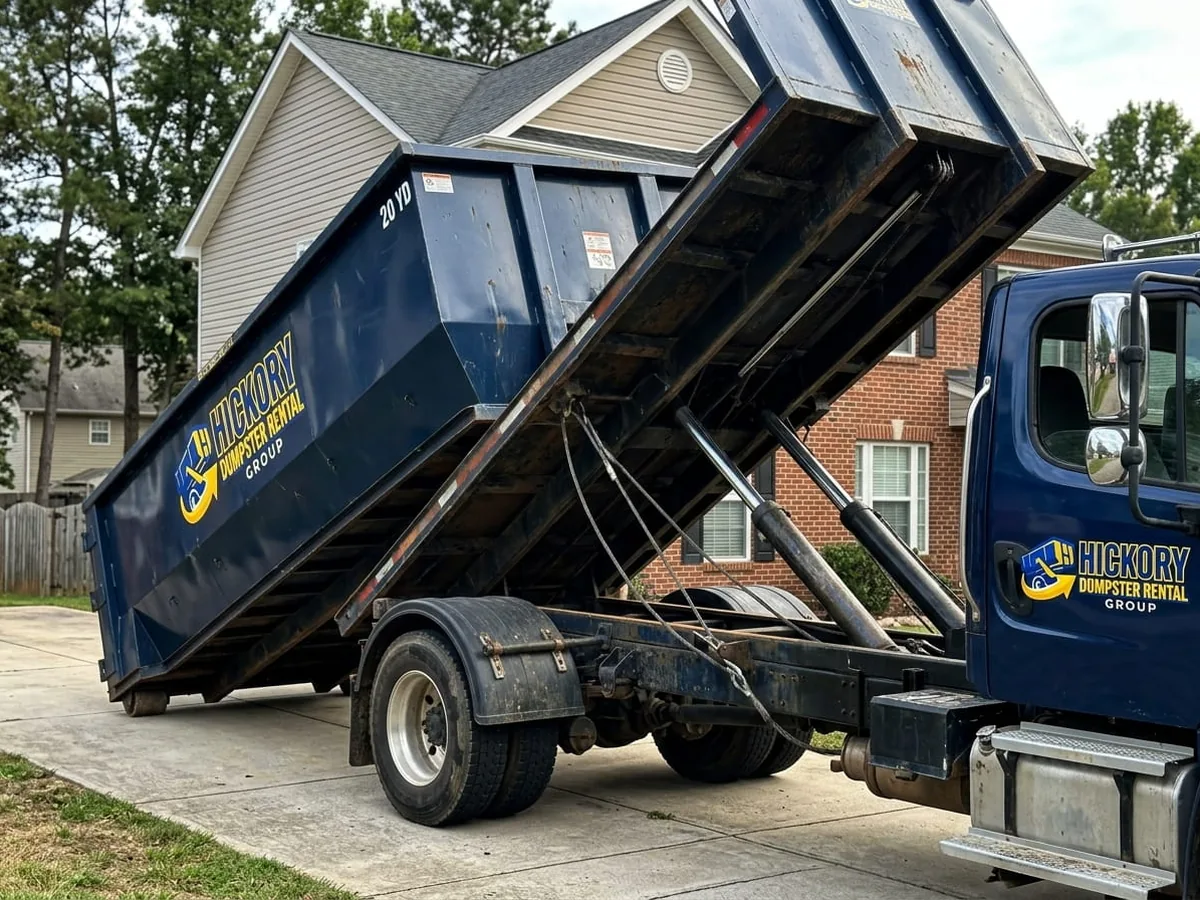
Most of what comes out of a renovation, a cleanout or a construction job in Greater Hickory goes straight in the container with no trouble. But a handful of materials are kept out of North Carolina landfills, and each one has its own path. Putting a banned item in a roll-off can mean a surcharge or a load that gets flagged at the scale. This guide walks through what can go in, what cannot, and where the restricted items actually belong, so your load clears cleanly the first time.
What Goes In Without a Problem
The everyday debris of a home or jobsite is exactly what a roll-off is for: lumber and framing offcuts, drywall and plaster, flooring and carpet, cabinetry and fixtures, roofing shingles, siding, concrete and brick (in a weight-rated load), general household junk, non-upholstered furniture, packaging, and clean wood and brush. If your project is a kitchen remodel, a roof tear-off, a garage cleanout or a new build, the overwhelming majority of what you generate is container-legal and needs no special handling.
What North Carolina Keeps Out of the Landfill
These are the materials you should not put in a general landfill load in North Carolina. Each is restricted under state rules, and each has its own destination:
- Whole scrap tires. Tires are handled under North Carolina's waste-tire program and are not accepted in a general landfill load — they go to a tire recycler or a county collection point.
- Lead-acid (vehicle) batteries. Car and truck batteries must be recycled, not landfilled, and most auto-parts stores take them back.
- Appliances and white goods. Refrigerators, freezers and air conditioners that hold refrigerant must have it removed by a certified technician before disposal; major appliances are recycled as scrap metal rather than buried.
- Used motor oil, oil filters, paint, solvents and other hazardous materials. None of these can go in a dumpster. They are household hazardous waste and need a proper drop-off.
- Electronics. Televisions, monitors and computers are best taken to an e-waste recycler or a county collection event rather than thrown in a general load.
- Anything flammable, explosive or sealed under pressure. Propane tanks, fuel cans and pressurized cylinders are never accepted.
Where the Restricted Items Go
Catawba County residents have a clear path for most of these. Catawba County runs the Blackburn Landfill on Rocky Ford Road in Newton plus residential drop-off and convenience sites that take household trash, yard debris and recyclables, and the county operates a household hazardous waste program for paint, chemicals and oil. Tires, batteries, appliances and electronics go to the appropriate recyclers or take-back programs, and many retailers accept old appliances and electronics on delivery of a new one. Household hazardous material — paint, chemicals, oil — should go to a designated collection point, never in the roll-off. If you are not sure where a specific item belongs, ask us before you load it.
A Note on Burning
Burning is not a legal shortcut for the things that cannot go in a dumpster. Under North Carolina's open-burning rules, construction and demolition debris, tires, shingles, treated wood, plastics, siding and household trash are never legal to burn. Natural yard brush and land-clearing wood can be burned only under specific conditions and generally require an open-burn authorization from the North Carolina Forest Service, which is suspended during droughts and county burn bans. The simplest path for a mixed load is a container, hauled to the Blackburn Landfill.
How We Keep Your Load Clean
The easiest way to avoid a problem is to tell us what you are throwing out before the container arrives. If a job is going to generate tires, appliances, electronics or hazardous material, we will tell you where each stream goes and keep it out of the roll-off. If it is a straightforward demolition or cleanout, we will size the container and route the load to the right facility. Either way, you are not left guessing at the scale. Call us with any question about a specific material at (828) 624-4167.