
Roof Replacement Dumpster Checklist for Greater Hickory Homeowners
A practical checklist for sizing, placing and timing a dumpster around a Greater Hickory re-roof, including real the Hickory area weather and permit considerations.
ReadConstruction Guide
How Greater Hickory-area builders size and time dumpsters across site prep, framing, roofing and interior finish, including North Carolina's gypsum disposal rule.
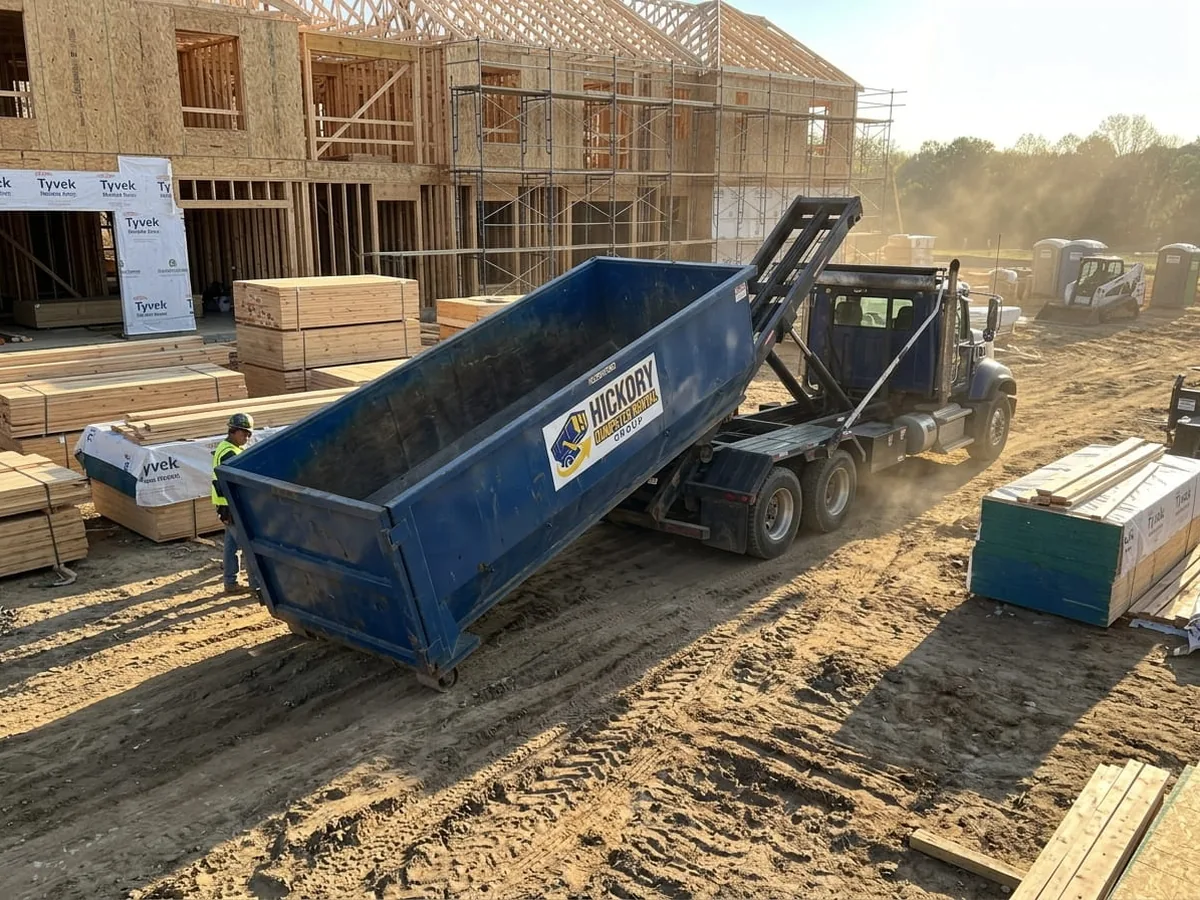
A new-construction project in the Hickory area doesn't generate one kind of waste — it generates a different kind at every phase, from site excavation through framing, roofing, and interior finish. A single dumpster sized for the wrong phase either sits half-empty for weeks or fills up before the crew is ready for a swap. This guide walks through how to think about a construction dumpster in phases, what North Carolina's own disposal rules mean for a few common materials, and how placement works on a lot that may not have a finished driveway yet.
A cleanout or a remodel usually produces one general mix of debris. New construction is different — site prep generates dirt, rock and old concrete; framing generates wood scrap and metal banding; roofing generates shingle scrap and underlayment; and interior finish generates drywall, flooring scrap and packaging. Because these materials differ so much in weight and volume, most builders in the Hickory area plan for either a container swap between major phases or a rotation of containers sized specifically for what that stage of the build actually produces, rather than trying to make one box work for the whole project.
Excavation, old foundation removal, and footing work produce dense material — dirt, rock, and broken concrete — that hits a container's weight limit long before it looks full. Concrete, brick and other masonry debris are dense enough to hit a container's weight limit fast, so this phase is usually best served by a dedicated low-fill container priced by weight rather than a standard mixed-debris box. If your site work also turns up old asphalt paving, that's on the same ban list and handled the same way.
Once framing starts, the waste stream shifts to offcuts of dimensional lumber, sheathing scrap, and metal banding and connectors. This is bulkier and lighter than foundation debris, so a mid-size roll-off — commonly a 20 or 30 yard container — tends to make more sense here than the low-fill box used during site prep. Clean wood and metal scrap are both easy to recycle and common in a framing phase, which is why we route them toward recovery wherever local facilities allow it rather than straight to the landfill.
New roofing on a new build produces less debris than a full tear-off re-roof, but underlayment scrap, packaging, and cut-off shingle waste still add up fast on a day when a roofing crew is working. Coordinating a smaller container specifically for the roofing phase, timed to arrive the morning the roof crew starts, keeps that fast-moving stage from competing for space with framing debris that hasn't been hauled yet.
Interior finish work is where a lot of first-time builders get caught off guard. Clean gypsum wallboard — ordinary drywall scrap from hanging and finishing — is better kept separate for recycling where a local facility accepts it, since wet gypsum in a landfill can release hydrogen sulfide. In practice this means drywall scrap from your build needs to be handled through a container and disposal route set up to keep it out of the regular waste stream, so it's worth flagging the material when you book a container for the finish phase rather than assuming it's treated the same as general mixed debris.
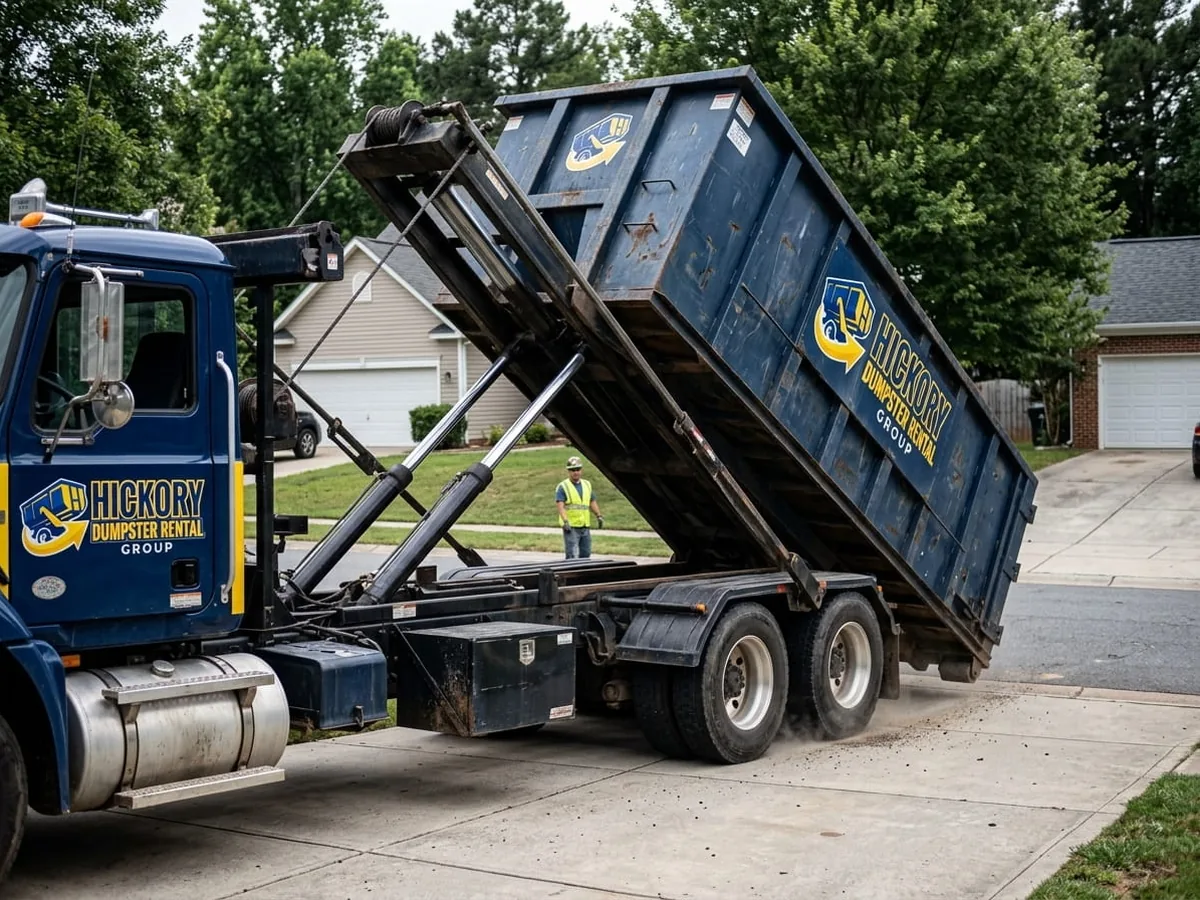
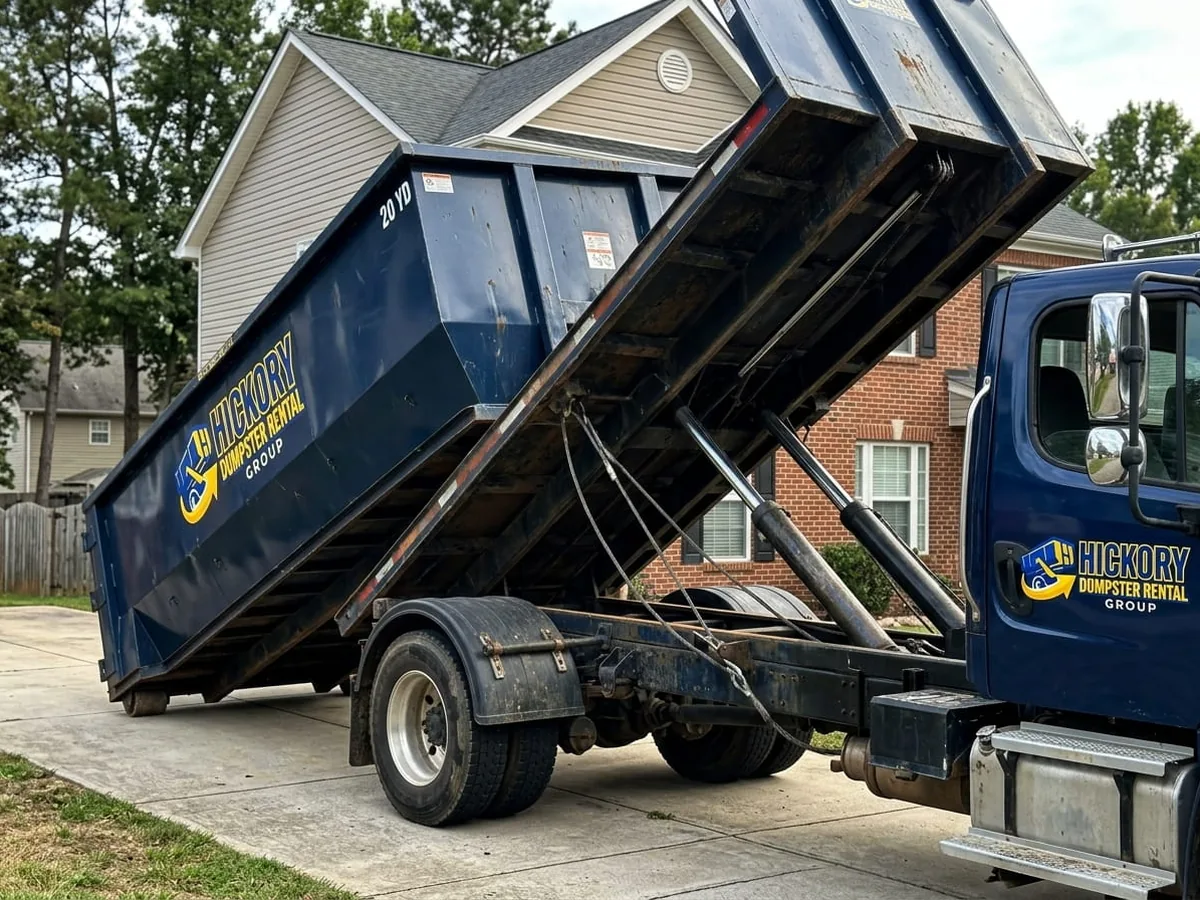
A lot under construction often doesn't have a finished driveway yet, which changes where a container can realistically sit. If there's a graded, stable area on the lot itself, that's usually the simplest placement and, staying on private property, generally doesn't need a permit. If the only workable spot is the street in front of the lot, that city requires a right-of-way permit from that city's Public Works Department when the container sits on a public street. Because street-placement permits are handled by each city (or by the county's Public Works for unincorporated addresses), the surrounding communities in our service area — Newton, Conover, Hildebran, Claremont, Mountain View, Maiden, Catawba and Brookford each route street-placement questions through its own public-works office, so it's worth a call to that city's office before committing to a street spot.
The most common frustration on a new-construction job isn't the container itself, it's timing a swap so an empty box is on site exactly when a phase wraps up. Talking through your general schedule when you book — even a rough one — helps line up delivery and swap timing so the site doesn't end up either short a container mid-pour or paying for an idle one during a slow week. If your schedule shifts, which it often does, one call is usually enough to move a swap date.
Getting the container right for each phase of a build, instead of trying to make one box do everything, keeps a Greater Hickory-area job site moving and keeps the waste stream handled the way North Carolina's own disposal rules expect.
Talk to a real person
Call (828) 624-4167 and describe the job. Flat price, stated tonnage allowance, and a delivery window on the same call.
Mon–Sat 7:00am – 7:00pm
From this guide
Not necessarily a different one for every phase, but most builders in the Hickory area do plan for a container swap or two, since site-prep debris (concrete, rock, dirt) is dense and heavy while framing and finish debris is bulkier and lighter — a single container rarely fits both well.
It can go in a container, but concrete, brick and other masonry debris are typically priced by weight rather than mixed in with general lightweight debris, since a dense load hits the weight limit fast.
Yes. Clean gypsum wallboard is best separated for recycling where a local facility accepts it, rather than mixed into a general landfill load. Flagging drywall scrap when you book a container for the finish phase makes sure it's routed correctly.
Most new-construction containers sit on a graded, stable area of the lot itself, which generally doesn't need a permit. If the only option is the street, Greater Hickory requires a right-of-way permit from that city's Public Works Department.
Sharing a rough build schedule when you book helps line up delivery and swap dates with your actual phases. Schedules shift often on a build, and moving a swap date is usually a single phone call.
Keep reading
A practical checklist for sizing, placing and timing a dumpster around a Greater Hickory re-roof, including real the Hickory area weather and permit considerations.
ReadA no-pressure guide for Greater Hickory-area families clearing a home after a loss or a move, covering sizing, sorting, handling bulky items, and permits.
ReadReal dimensions, capacity, and typical uses for every dumpster size we deliver across Greater Hickory and the Hickory area, from a 10-yard cleanout to a 30-yard demolition job.
Read