Greater Hickory's housing stock runs from the established 1970s and 1980s districts like Downtown Greater Hickory and Hildebran to newer downtown and Portola Springs construction and a steady wave of remodel-and-personalize projects, which makes renovation and remodel work some of the most common reasons people here rent a roll-off. A remodel generates a specific kind of debris — bulky, mixed, and heavier than it looks — and sizing a container for it is less about the size of the house than about what you're actually tearing out. Here's what drives the sizing and the logistics for a renovation cleanout in the Hickory area.
What a Remodel Actually Sends to the Dumpster
The debris from a renovation depends on the room, but the categories are predictable: old cabinetry and countertops from a kitchen; tubs, vanities, tile and fixtures from a bathroom; carpet, hardwood, laminate and tile from a flooring job; drywall, plaster and lath from wall changes; and trim, doors and the odd window throughout. Whole-home remodels and additions add framing lumber and roofing or siding to the mix. Most of it is bulky rather than dense — but tile, plaster and anything with mortar or thinset behind it carries real weight, which is what tends to drive the size and the tonnage conversation.
Sizing a Container for a Remodel
A single-room project — a bathroom gut, a small kitchen refresh, one room's worth of flooring — usually fits a 10 or 15 yard container. A full kitchen remodel, a multi-room flooring replacement, or a larger renovation more often calls for a 20 yard. Whole-home remodels, additions and gut jobs typically move to a 30 yard, or to a swap-out where one container is hauled and replaced as the work moves phase to phase. If a remodel is heavy on tile, plaster or masonry, it's worth saying so when you book — that material can hit the tonnage allowance before the box looks full, and it sometimes makes sense to keep the heavy debris in its own container.
Phasing a Longer Renovation
Bigger projects rarely generate their debris all at once. Demolition comes first and fills a container fast; then there's a quieter stretch during rough-in and finish work; then a final push of packaging, offcuts and jobsite trash at the end. Rather than let a full container sit on the driveway for weeks, many Hickory homeowners and contractors schedule a swap-out — one container for the demolition phase, another near the finish — which keeps the driveway usable and the rental period honest. We'll build the schedule around the project rather than force a single long rental.
Driveway Placement and Sandy Ground
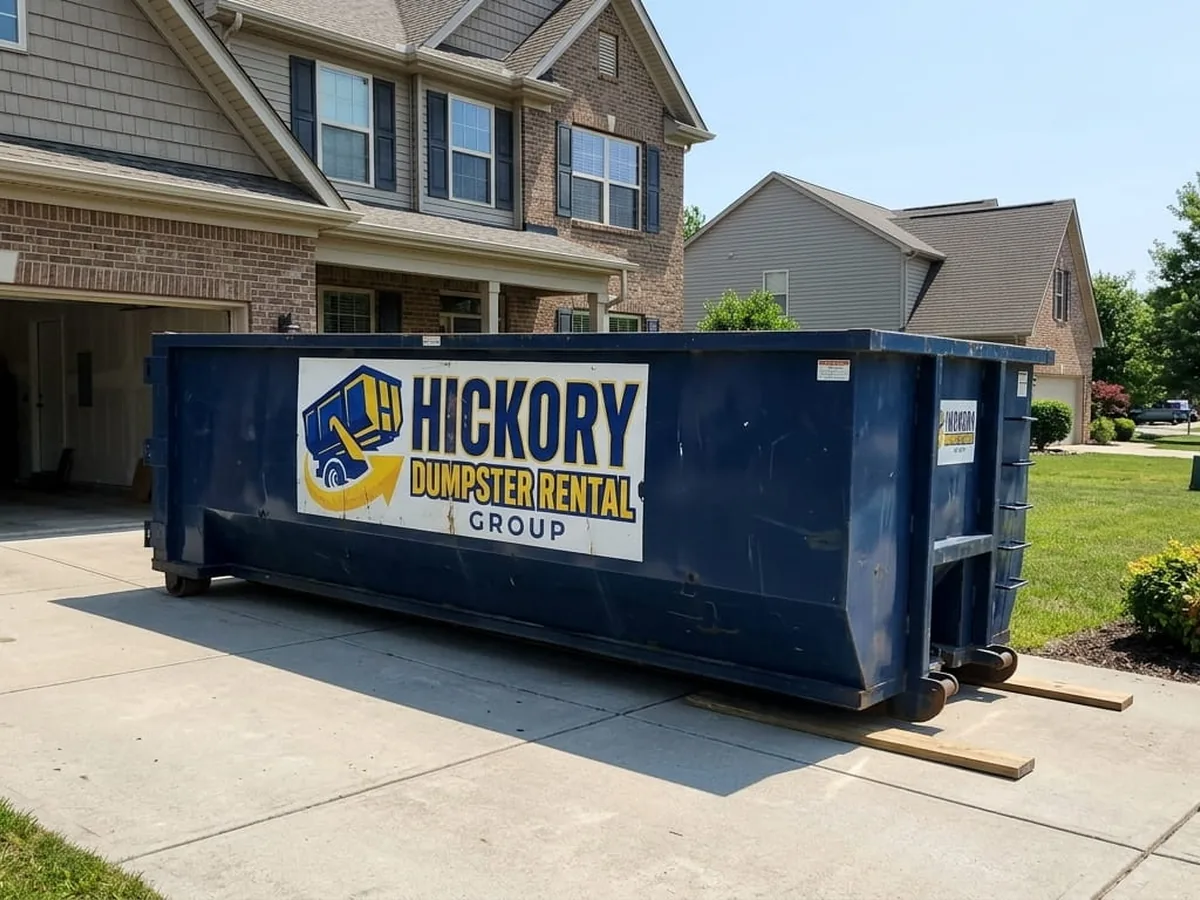
A loaded renovation container is heavy, and Greater Hickory sits on the region's characteristic red clay over hard bedrock, which softens after heavy rain. We set every container on boards to spread the load and protect the driveway surface, and we ask about slope, low limbs and gate access before delivery rather than discovering them on the day. If the driveway is too short or steep and the box has to sit on a public street, that city requires a right-of-way permit from Public Works; on your own property, no permit is needed — there's no cubic-yard threshold and no fire-department permit. In the surrounding cities we serve, each handles street placement through its own public-works office.
Where Renovation Debris Goes
Construction and demolition debris from a remodel — drywall, lumber, cabinetry, flooring, tile and fixtures — heads to a C&D landfill such as WM's Jefferson Pike facility right here in Greater Hickory, and we pull clean metal and other recoverable material for recovery where the local facilities allow it. North Carolina doesn't impose the broad landfill bans some states do, so most renovation debris can go straight in the container; the items that need a separate path are the usual ones — appliances and white goods, scrap tires, lead-acid batteries, used oil, and any hazardous material like paint, solvents or asbestos. Tell us the mix when you book so the load is handled correctly and priced right.